My Engineering Career
For over forty years I have worked in electronics and digital engineering, from early microprocessors and programmable logic to FPGAs, engineering leadership and satellite communications.
Technology has changed enormously during that time. So has my career. But one thing has remained constant: I am still learning.
Marconi – Starting as an Engineer
I began my engineering career at Marconi Instruments in 1985, after completing my HND in Electrical and Electronic Engineering.
My first major project involved developing software for an automated test system. I wrote the test software in ATLAS on the Marconi GRADUATE computer and made updates to the assembly-language software running on the system's microprocessor.
It quickly became obvious how valuable the nine months of industrial experience from my HND had been. I was already familiar with an engineering environment and able to put my knowledge into practice.
I delivered the project on time and to the required standard, receiving a 1987 Engineering Excellence Award.
Marconi – Becoming a Digital Engineer
Marconi gave me experience across many areas of engineering. I spent a year in the test department, learning to use test equipment and reverse engineering PCBs for which little or no design information existed. I developed software and worked directly with customers, and as part of a three-person team helped redesign a complete electronic system.
Then, in 1990, I was given a problem that would change the direction of my career.
A system contained several PCBs, around half of which were VME interfaces implemented using conventional digital logic. We wanted to reduce each interface to around one-third of a PCB so that other functions could share the board.
PLDs and CPLDs were too small, so I investigated a relatively new technology: FPGAs.
I evaluated Altera and Xilinx and selected the Xilinx XC2064 FPGA. I established the development capability required, using OrCAD for schematic capture and the Xilinx XACT development tools, and designed the VME interface in the FPGA.
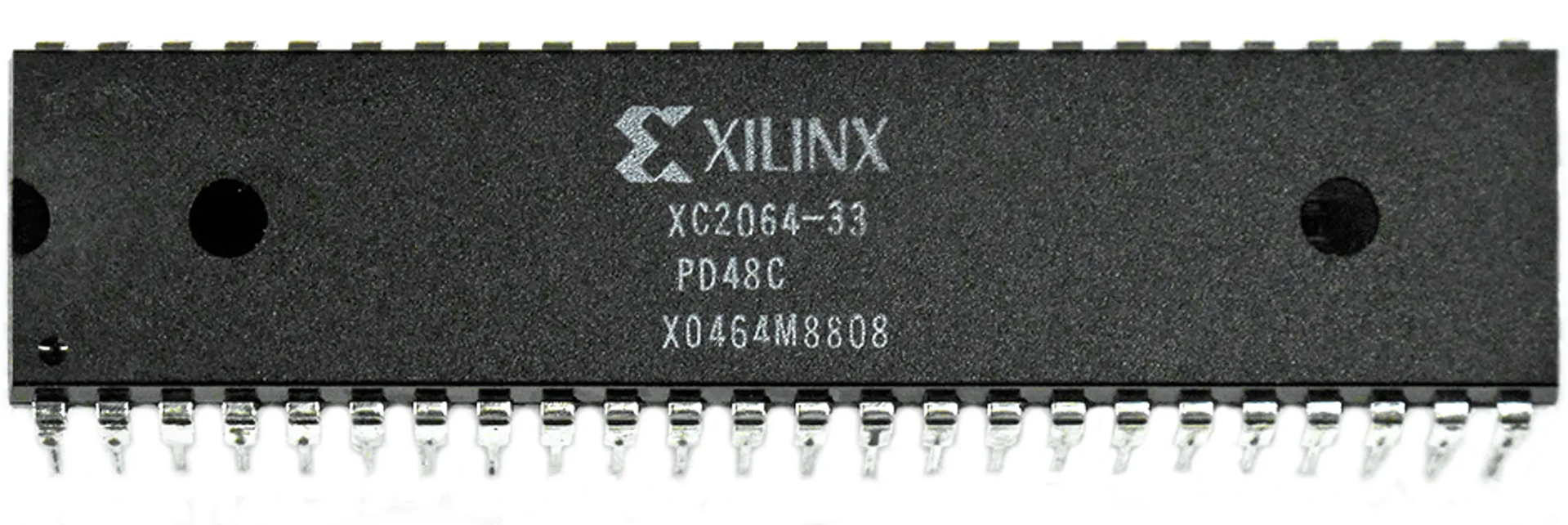
The solution halved the number of boards required and remained in use into the 2010s.
More importantly, it introduced me to FPGA technology and set me on a career path that I have now followed for 35 years.
GEC-Marconi / BAE Systems – Taking the Opportunity
I saw a job advertised in Edinburgh for a digital and FPGA designer. I could do only six of the ten things they were looking for, so I decided not to apply.
My husband asked a different question: how quickly could I learn the other four?
Most involved tools I hadn't used before, and I knew I could learn them. So I applied – and got the job.
I joined a digital and analogue design group providing specialist expertise and solving engineering problems across a range of projects.
One of my most significant projects involved combining the functions of two existing PCBs onto a single board. I was responsible for the processor electronics and firmware for its two FPGAs, taking the work through research, design, test and system integration.
The design introduced new component and packaging technologies and reduced size, weight, power consumption, component count and cost while improving reliability. The resulting system remains in use today.
ECS Technology – Taking a Risk
I wasn't looking to leave GEC-Marconi when I was headhunted by ECS Technology. Moving from a large company into a different industry and an SME was a risk, but I decided to take it.
Working in a small company was very different. My responsibilities ranged from digital and FPGA design and evaluating engineering tools to recruitment, ISO 9001 processes and customer meetings. I even found myself ordering furniture and pictures for the office.
Technically, the move took me into high-speed telecommunications. I established and led ECS's FPGA team and contributed to Agilent's commercial 10.7 Gb/s OmniBER Optical Transport Network product family.
For the first time, I saw at close hand how a small engineering company operated – experience that would become valuable again much later in my career.
Turning a Setback into an Opportunity
After three years, the dot-com crash hit telecommunications and my working week was reduced to two and a half days. With engineers being made redundant across the industry, finding another job wasn't easy.
Instead, I saw an advert for an MSc at the Institute for System Level Integration (iSLI). The lectures were in the mornings, allowing me to study at university and work at ECS in the afternoons.
Combining an MSc, work and bringing up two young children was intense, but I completed the MSc in 18 months. Looking back, I'm still not entirely sure how I managed it.
Then another opportunity appeared: an Engineering Doctorate position as an FPGA Research Engineer.
I applied and was accepted.
Algotronix / EngD – Research and Innovation
In 2005, I became a Research Engineer with Algotronix while undertaking an Engineering Doctorate in System Level Integration.
My research moved my FPGA experience into hardware security. Building on Tom Kean's original DesignTag concept, I developed active and passive thermal-tag implementations and an FPGA-based true random-number generator.
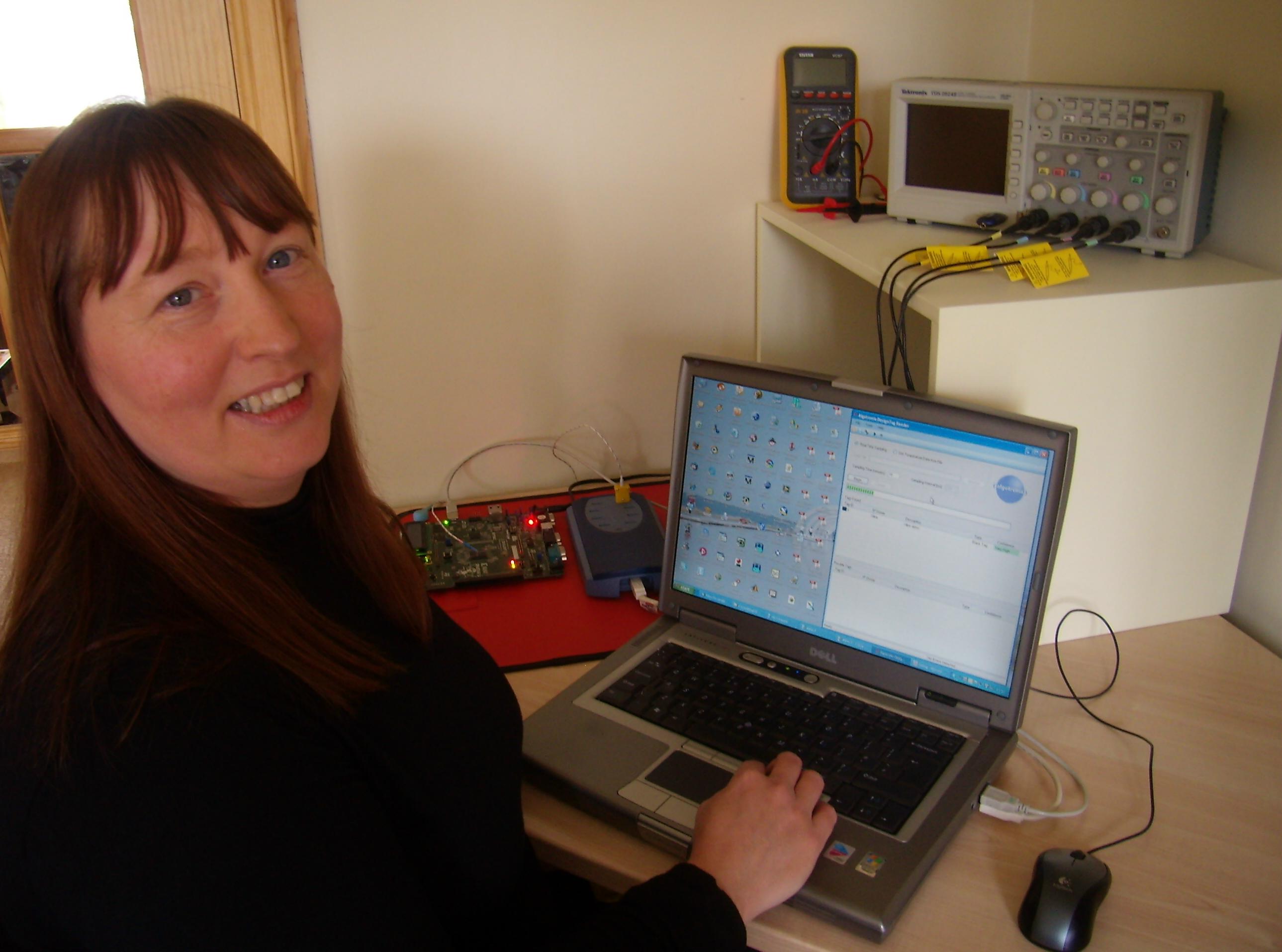
DesignTag was commercially launched in 2008, and the research received three awards: the Elektra Student Engineer Award, an IET Innovation Award and an NMI Emerging Technology Award.
The EngD also broadened my understanding beyond technology. I developed a five-year business plan for Algotronix as part of a Master's-level Business Studies module at the University of Glasgow Business School, learning to think about customers, competitors, differentiation and growth.
This period also marked the beginning of another important part of my career. I became a STEM Ambassador and joined WES, the IET and IEEE, beginning my involvement in the wider engineering community and volunteering.
Leonardo – Back to the Beginning – Well Almost
As my EngD approached its end, I applied to Selex, now Leonardo. My interviewers turned out to be two previous bosses – one from my first role at Marconi and the other from BAE Systems.
I was offered two jobs: a design role or responsibility for the Firmware Process.
I chose the Firmware Process.
One of my most significant technical contributions was developing a DO-254-compliant FPGA lifecycle, subsequently adopted across Leonardo UK. I led its application on the CAPTOR-E radar programme and became EuroRadar FPGA Process Lead.
The scale was very different from my earlier engineering work. The lifecycle ultimately governed around 150 designs involving approximately 100 FPGA engineers.
My responsibilities continued to grow beyond FPGA engineering. I led firmware, PCB and digital engineering teams and eventually became Interim Electronics Functional Lead, with responsibility for approximately 300 engineers.
My job had changed from creating designs myself to creating the processes, capability, tools and environment that enabled hundreds of engineers to deliver them.
Leonardo – Beyond Engineering
Leonardo also supported my growing involvement in the wider engineering community. I participated in STEM activities, established Girls into Engineering, worked with WES initiatives and mentored engineers working towards professional registration and Fellowship.
My engineering and volunteer careers were developing alongside each other.
After thirteen years at Leonardo, I reached another decision point. My husband had retired and, after almost forty years in engineering, I wondered whether I should do the same.
But I wasn't ready. I still enjoyed engineering, wanted to learn and wanted another challenge.
Celestia – A New Challenge
While considering my options, I met Malachy, whom I had first met during my EngD, for coffee. I thought we were going to discuss whether I should retire.
Instead, he suggested I come and work at Celestia.
I joined as Head of Digital Systems and subsequently became Engineering Director, moving into another new field: satellite communications.
Today, I have technical responsibility for the development of an electronically scanned Ka-band phased-array gateway for Low Earth Orbit satellite communications. The multibeam gateway is being developed to communicate with up to 28 satellites, potentially replacing up to 28 conventional parabolic antennas.
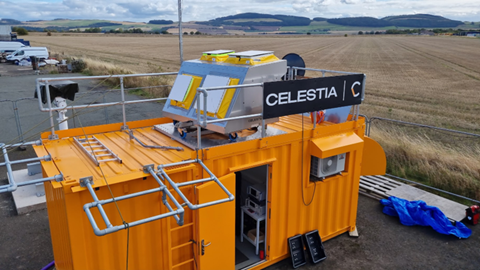
My role brings together RF, digital electronics, software, mechanical and systems engineering. The technology has already been successfully demonstrated in orbit with Eutelsat OneWeb's JoeySat, and the programme has received the Space Ground Segment Conference Enterprise Project of the Year and Electronics Weekly Elektra Design Team of the Year awards.
After many years in increasingly senior leadership positions, I am once again close to the engineering, working with a small team developing new technology.
Forty years into my engineering career, I'm still learning.